Manual Gas Pump: A Comprehensive Overview
Manual gas pumps represent a fascinating intersection of engineering, history, and Americana, evolving from kerosene dispensers to essential tools for the burgeoning automobile age.
Initially, these pumps demanded physical effort, but technological advancements ultimately led to the widespread adoption of electric alternatives for increased convenience.
Historical Context & Origins
The story of the manual gas pump isn’t simply about fueling cars; it begins well before the automobile’s widespread adoption. In the pre-automobile era, kerosene was the dominant fuel, powering lamps and stoves, while gasoline was considered a byproduct of kerosene refining – a volatile substance with limited immediate use.
The need for a reliable method to dispense kerosene safely and accurately spurred early innovation. Before dedicated pumps, kerosene was often sold by the barrel, leading to inconsistencies and potential hazards. This demand laid the groundwork for the invention that would eventually revolutionize fuel dispensing. Understanding this initial context is crucial; the first pumps weren’t designed for cars, but for a different energy need entirely, setting the stage for their adaptation with the rise of motorized vehicles.
The evolution from kerosene to gasoline dispensing is a key element of this history.
The Pre-Automobile Era: Kerosene & Early Pumps
Prior to the dominance of gasoline, kerosene reigned supreme as the primary fuel source for illumination and heating. Stoves and lamps relied heavily on kerosene, creating a substantial demand for efficient and safe dispensing methods. Early attempts at fuel delivery involved selling kerosene by the barrel, a cumbersome and imprecise process prone to spillage and inconsistency.
This necessity fueled the development of rudimentary pumps, initially focused on kerosene. These early pumps were far removed from the sophisticated designs that would follow, often being manually operated and lacking precise metering capabilities. They represented a first step towards controlled fuel distribution, addressing the limitations of barrel sales. The initial pumps were designed to hold one barrel of gasoline.

These early systems were the precursors to the modern gas pump.
Sylvanus Bowser and the Invention of the Gasoline Pump
Sylvanus Bowser, a prominent figure in the history of fuel dispensing, is credited with inventing the first commercially viable gasoline pump. Initially, his innovation wasn’t intended for automobiles – they hadn’t yet become widespread. Instead, Bowser focused on improving the dispensing of kerosene, a product in high demand for nearly half a century.
His invention reliably measured and dispensed kerosene, addressing the inefficiencies and inaccuracies of previous methods. Recognizing the potential of gasoline as a fuel source, Bowser adapted his kerosene pump design to handle the more volatile substance. This pivotal adaptation marked the evolution from kerosene pumps to the metered gasoline pump we recognize today.
Bowser’s ingenuity laid the foundation for the modern gas station experience.
Early Manual Pump Design (Late 19th – Early 20th Century)
Early manual gas pumps, originating in the late 19th and early 20th centuries, were remarkably simple in their construction. Originally designed to hold one barrel of gasoline, these pumps relied heavily on manual operation. A key component was the wooden plunger, used to draw fuel upwards, coupled with marble valves to control the flow and prevent backflow.
Dispensing fuel required significant physical effort, as attendants manually operated the pump to deliver the desired amount. These early designs lacked the precision of later models, and dispensing was often a slower, more laborious process. The pumps were a direct response to the need for a more controlled and reliable method of fuel distribution.
Efficiency was limited, but it was a crucial first step.
Materials Used in Early Manual Gas Pumps
Early manual gas pumps were constructed primarily from readily available and durable materials of the time. Wood played a significant role, particularly in the construction of the plunger mechanism, providing a functional and cost-effective solution for moving the fuel. Marble valves were crucial for controlling the flow, chosen for their smooth surface and ability to create a tight seal.
The pump bodies themselves were often made of cast iron or steel, offering the necessary strength and robustness to withstand repeated use and exposure to the elements. Hoses were typically constructed from rubber, though early versions were less refined than modern equivalents.
These materials reflected the technological capabilities and material science of the late 19th and early 20th centuries.
Mechanism of Operation: How Manual Pumps Worked
Early manual gas pumps operated on a relatively simple, yet effective, mechanical principle. The user would engage the handle, activating a lever system that drove a wooden plunger within the pump’s cylinder. This plunger created suction, drawing fuel from the underground tank.
As the plunger moved upwards, marble valves strategically positioned within the pump would open and close, controlling the fuel’s flow. The upward stroke filled the cylinder, and the downward stroke forced the fuel through the hose and nozzle.
The amount of fuel dispensed was determined by the number of strokes, requiring attendants to carefully monitor each pumping action. It was a physically demanding process, relying on manual effort and precision.

Evolution of Manual Gas Pump Technology
Gas pump technology progressed from basic barrel pumps to more refined mechanical designs, incorporating marble valves and wooden plungers for improved fuel dispensing efficiency.
From Barrel Pumps to Improved Mechanical Designs
Initially, manual gas pumps were rudimentary, often resembling a single barrel positioned upright. These early iterations, predating widespread automobile use, were primarily designed for dispensing kerosene – a vital fuel source for lamps and stoves.
The original pumps, holding one barrel of gasoline, relied on a simple yet effective mechanism. Over time, designs evolved, moving beyond the basic barrel structure to incorporate more sophisticated mechanical elements. This progression aimed to enhance both the accuracy and ease of fuel dispensing.
Improvements included refinements to the pumping action and the introduction of components designed to regulate flow. These advancements were crucial in transitioning from a simple dispensing method to a more controlled and reliable system, laying the groundwork for future innovations in fuel delivery technology.
The Role of Marble Valves and Wooden Plungers
Early manual gas pumps ingeniously utilized readily available materials to achieve functionality. Central to their operation were marble valves, prized for their durability and ability to create a tight seal within the pump mechanism. These valves controlled the flow of fuel, ensuring accurate dispensing with each pump stroke.
Complementing the marble valves were wooden plungers, which served as the driving force behind fuel delivery. The manual pumping action pushed these plungers, creating suction and pressure to draw fuel from the tank and dispense it through the nozzle.
The combination of these components – the precise sealing of marble valves and the robust action of wooden plungers – represented a clever engineering solution for the time, enabling reliable fuel dispensing before the advent of more advanced materials and technologies.
Measuring Accuracy and Dispensing Control
Achieving accurate measurement was a primary challenge in the early days of manual gas pumps. Sylvanus Bowser’s invention focused on reliably metering kerosene, a product in high demand, and this technology transitioned to gasoline. Early pumps aimed to provide a quantifiable amount of fuel dispensed with each operation.
Dispensing control relied entirely on the operator’s manual effort. The number of strokes of the handle, coupled with the pump’s internal mechanism, determined the volume of fuel delivered. While not as precise as modern electronic systems, these pumps offered a significant improvement over previous, less regulated methods.
The accuracy, though limited, was crucial for establishing trust between vendors and customers, fostering a fair exchange in the rapidly growing fuel market.
Transition from Kerosene to Gasoline Dispensing
Initially, Sylvanus Bowser’s pump wasn’t designed for automobiles; it addressed the need for reliable kerosene dispensing for lamps and stoves. Kerosene was the dominant fuel source, with gasoline initially considered a byproduct of kerosene refining. However, the rise of the automobile dramatically shifted demand.
As gasoline’s importance grew, Bowser’s pump design was adapted to handle this more volatile fuel. This transition wasn’t immediate, but the fundamental metering and dispensing principles remained consistent. The existing infrastructure, though originally intended for kerosene, provided a foundation for gasoline distribution.
This adaptation proved pivotal, enabling the widespread adoption of gasoline as the primary fuel for the burgeoning automotive industry, solidifying the pump’s role in modern life.
Components of a Typical Manual Gas Pump

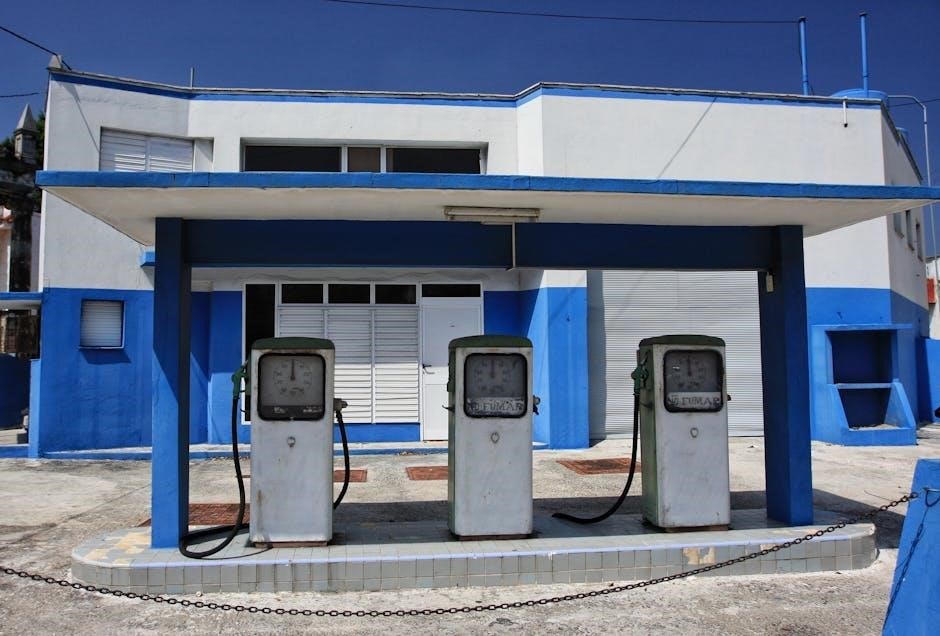
Essential parts included the pump body, handle/lever system, metering mechanism, nozzle/hose, and a stable base – all working in concert to dispense fuel efficiently.
The Pump Body and Housing
The pump body served as the central structural element, encasing the intricate internal mechanisms responsible for fuel measurement and delivery. Early housings were constructed from cast iron, providing durability and robustness, essential for withstanding frequent use and outdoor exposure.
As designs evolved throughout the mid-20th century, manufacturers increasingly incorporated stainless steel into the pump body, offering enhanced corrosion resistance and a more visually appealing aesthetic. The tapered, monochrome designs of the 1950s and 60s exemplify this shift towards streamlined form and material innovation.
Beyond structural integrity, the housing also played a crucial role in protecting the delicate metering components from the elements and potential damage. The overall design aimed for both functionality and a recognizable presence at gas stations.
The Handle and Lever System
The handle and lever system were the primary user interface for operating manual gas pumps, directly translating human effort into fuel dispensing. Early pumps required significant physical exertion, demanding operators to repeatedly pull a lever or crank a handle to draw fuel from the underground tank.
This mechanical linkage connected directly to the metering mechanism and the wooden plunger, initiating the fuel transfer process. The design prioritized simplicity and reliability, as these pumps lacked the benefit of electric power. The force applied to the handle determined the volume of fuel dispensed.
Over time, refinements were made to reduce the effort required, but the fundamental principle of manual operation remained consistent until electric pumps became prevalent, offering a far easier experience.
The Metering Mechanism
The metering mechanism was the heart of a manual gas pump, responsible for accurately measuring the volume of fuel dispensed with each operation. Early designs relied heavily on precise mechanical components, including marble valves and the wooden plunger, to control fuel flow.
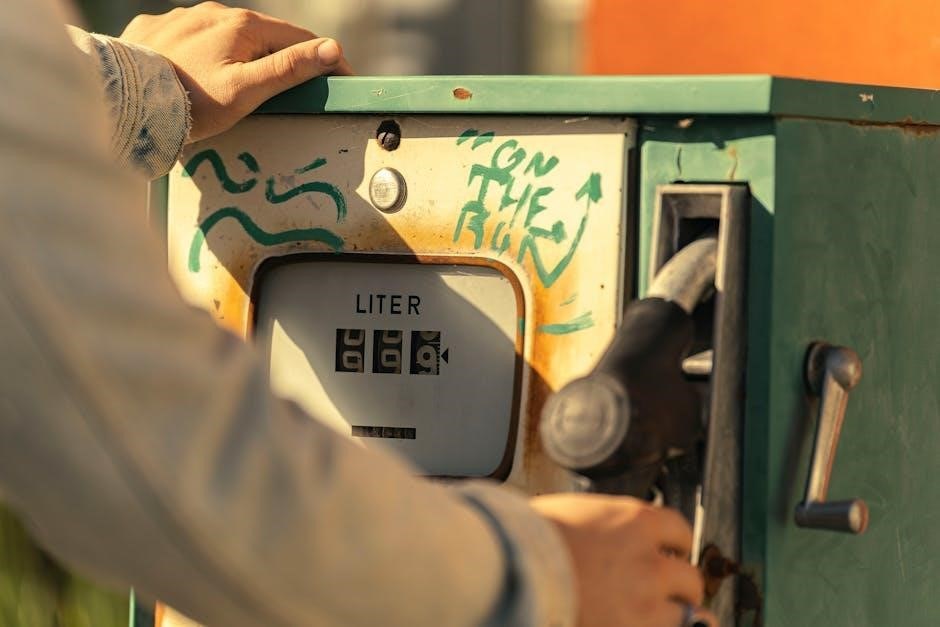
As the handle was operated, the plunger moved within a cylinder, displacing fuel and driving the metering system. This system was directly linked to a visible counter, displaying the gallons or liters delivered. Accuracy was paramount, as it directly impacted both the gas station’s profitability and customer trust.
The complexity of these mechanisms increased over time, striving for greater precision and reliability, but always remained dependent on the operator’s physical input and the integrity of the mechanical parts.
The Nozzle and Hose Connection
The nozzle and hose connection represented the final stage in the fuel delivery process of a manual gas pump, bridging the pump’s internal mechanism to the vehicle’s fuel tank. Early hoses were typically constructed from flexible rubber, often reinforced with fabric braiding to withstand fuel pressure and prevent kinking.
The nozzles themselves were relatively simple, often featuring a basic lever or valve to control fuel flow when inserted into the tank’s filler neck. These early nozzles lacked the sophisticated shut-off mechanisms found in modern pumps, relying on the attendant to carefully monitor and stop the flow.
The connection point between the hose and pump body was crucial, requiring a secure and leak-proof seal to prevent spills and ensure safe operation. Over time, materials and designs improved, enhancing durability and reducing the risk of fuel contamination.
The Base and Stability Features
The base of a manual gas pump was a critical component, providing essential stability and support for the entire structure. Early pumps often featured heavy, cast-iron bases designed to withstand the considerable weight of the fuel they contained and the forces applied during operation.
These bases were typically broad and substantial, ensuring the pump remained upright even with vigorous pumping action. Some designs incorporated mounting points for securing the pump to the ground, further enhancing stability, particularly in high-traffic areas.
As pump designs evolved, base materials diversified, with steel becoming increasingly common. The base also served as an anchor point for the pump’s internal mechanisms and provided a foundation for the hose and nozzle arrangement, contributing to overall functionality and safety.
Manual Gas Pumps in the Mid-20th Century
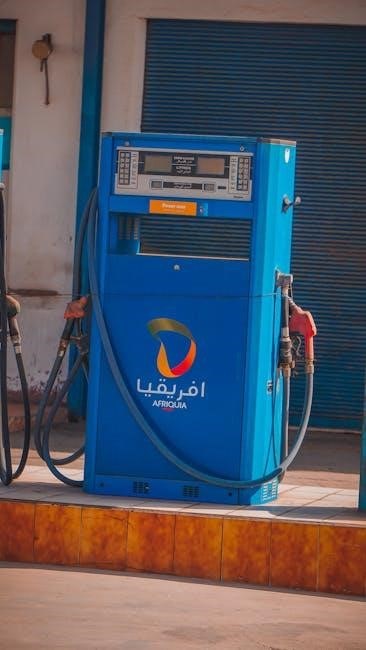
Mid-century manual pumps showcased stainless steel tops with monochrome bottoms, offering expanded fuel choices and relying heavily on attendant operation for service.
Design Changes: Stainless Steel & Monochrome Aesthetics
Following the 1940s, manual gas pump designs underwent a notable shift, moving towards a simpler, yet visually distinct aesthetic. Pumps from the 1950s and 60s commonly featured stainless steel tops, providing a durable and gleaming finish that contrasted with the tapered, monochrome bottoms.
This design choice represented a departure from earlier, more ornate styles, embracing a cleaner and more streamlined appearance. The monochrome color schemes – often consisting of blacks, whites, and grays – contributed to a sophisticated and modern look, reflecting the design trends of the era.
While the visual complexity decreased, the functionality expanded. This period saw an increase in the variety of fuel options available to consumers, necessitating changes in pump design to accommodate multiple fuel grades and types. The stainless steel and monochrome aesthetic became a defining characteristic of mid-century gas pumps, embodying a blend of practicality and style.
Increased Fuel Options and Selection
As the automotive industry evolved throughout the mid-20th century, so too did the demands placed on fuel and, consequently, gas pump technology. The simple need for “gasoline” expanded to include various grades and formulations, requiring pumps to accommodate a wider selection of fuel options for consumers.
This shift necessitated design modifications to manual pumps, often involving multiple hoses and dispensing nozzles, each dedicated to a specific fuel type. Attendants played a crucial role in guiding customers through these choices, ensuring they received the correct fuel for their vehicles.
The increased fuel options reflected advancements in engine technology and a growing understanding of octane ratings and fuel performance. Gas stations responded by offering premium, regular, and sometimes even specialized fuels, transforming the simple act of filling up into a more nuanced selection process.
The Role of Attendants in Manual Pump Operation
Prior to self-service stations, gas station attendants were integral to the entire fueling process when using manual gas pumps. Their responsibilities extended far beyond simply dispensing fuel; they were the key to safe and efficient operation.
Attendants physically operated the manual pumps, requiring considerable effort to dispense the requested amount of fuel. They also managed the selection of fuel grades, ensuring customers received the appropriate option for their vehicles. Furthermore, attendants were responsible for checking oil levels, tire pressure, and providing basic vehicle maintenance.
Their presence was crucial for safety, preventing spills and addressing any potential hazards. The attendant-operated system fostered a level of customer service largely absent in modern self-service stations, building relationships and providing personalized assistance.
Collecting and Restoring Manual Gas Pumps
Vintage gas pumps offer a unique collectible hobby, demanding knowledge of models, manufacturers, and condition assessment for successful restoration and potential investment.
Identifying Different Models and Manufacturers
Identifying manual gas pumps requires careful observation of distinct features. Early pumps, like those from Sylvanus Bowser, often featured a barrel design and wooden components. Later models transitioned to steel, with manufacturers like Bennett and Wayne becoming prominent.
Distinguishing characteristics include the pump’s body style – tapered monochrome designs emerged in the 1950s and 60s – and the presence of specific branding or logos. Examining the metering mechanism and nozzle design can also pinpoint the manufacturer and approximate production era.
Serial numbers, if present, are invaluable for tracing a pump’s history. Collectors often consult reference guides and online forums dedicated to gas pump identification to accurately determine a pump’s origin and rarity. Understanding these nuances is crucial for both collectors and restorers.
Assessing the Condition of a Vintage Pump
Evaluating a vintage manual gas pump’s condition is vital before purchase or restoration. Begin with a thorough inspection for rust, both surface and structural. Check the pump body, base, and all visible components. Examine the metering mechanism for functionality – does the meter turn freely?
Assess the nozzle and hose connection for damage or deterioration. Wooden parts, common in early models, are prone to rot and require careful scrutiny. Look for missing or damaged decals and glass globes, as replacements can be costly.
Determine if the pump is complete; missing parts significantly impact value. Document any flaws with photographs. A pump in original, unrestored condition, even with imperfections, may be more desirable to some collectors.
Restoration Techniques and Parts Sourcing
Restoring a manual gas pump requires patience and skill. Begin by carefully disassembling the pump, documenting each step with photos. Media blasting can remove rust, but avoid harsh methods that damage original paint. Repainting should match the original colors as closely as possible.
Parts sourcing is often the biggest challenge. Online forums, antique pump clubs, and specialized vendors are invaluable resources. Reproduction parts are available for some models, but original parts are preferred for authenticity. Marble valves and wooden plungers often require specialized repair or replacement.
Decals can be recreated or sourced from restoration specialists. Prioritize preserving original components whenever feasible, and focus on functionality alongside aesthetics.
Value and Investment Potential for Collectors
The value of a manual gas pump varies greatly depending on its rarity, condition, and historical significance. Pumps from well-known manufacturers, or those representing early designs, generally command higher prices. Excellent original condition significantly increases value, while restored pumps are also desirable, provided the restoration is accurate.
Investment potential is strong for well-chosen pumps. The market has seen consistent growth, driven by nostalgia and the increasing popularity of automobilia. Identifying desirable models and understanding market trends are crucial. Pumps with unique features or local historical connections can be particularly valuable.
Proper storage and maintenance are essential to preserve investment value. Collectors often specialize in specific brands or eras, deepening their knowledge and maximizing returns.
Safety Considerations with Manual Gas Pumps
Vintage manual gas pumps present potential hazards due to flammable fuels and aging components; proper handling, maintenance, and awareness of regulations are crucial for safe operation.
Potential Hazards and Risks
Manual gas pumps, while historically significant, present several inherent safety risks. The primary concern revolves around the highly flammable nature of gasoline and, historically, kerosene. Leaks from aging hoses, deteriorated seals, or damaged pump bodies can create a significant fire hazard, especially given the potential for static electricity buildup during manual operation.
Furthermore, the mechanical components themselves pose risks. The handles and levers, if malfunctioning, could cause injury. Older pumps lack modern safety features like automatic shut-off valves, increasing the risk of spills. The weight and construction of these pumps also present a potential for physical strain or injury during movement or restoration. Rust and corrosion can compromise structural integrity, leading to instability and potential collapse. Finally, improper handling of fuel during dispensing can lead to skin irritation or inhalation of harmful vapors.
Proper Handling and Maintenance
Safe operation of manual gas pumps necessitates diligent handling and regular maintenance. Prior to use, thoroughly inspect the pump for any signs of leaks, corrosion, or damage to hoses and seals. Ensure the base is stable and the pump is securely positioned. When dispensing fuel, avoid overfilling and immediately address any spills.
Maintenance should include periodic cleaning to remove dirt and grime, lubrication of moving parts, and careful inspection of the metering mechanism for accuracy. Replace worn or damaged components promptly. Store pumps in a dry, well-ventilated area, away from ignition sources. When restoring a pump, prioritize safety by disconnecting all fuel lines and addressing any structural weaknesses. Always consult relevant manuals and seek professional assistance when needed to ensure proper functionality and minimize risks.
Regulations and Compliance
Historically, regulations surrounding manual gas pumps were less stringent than those governing modern fueling systems. However, even vintage pumps are subject to certain safety and environmental standards, particularly if displayed or used for demonstration purposes. Compliance often involves adhering to local fire codes regarding flammable liquid storage and dispensing.
Owners and collectors must ensure pumps are rendered non-operational if they cannot meet current safety requirements. This may involve disabling the fuel lines or sealing the metering mechanism. Regulations concerning the display of antique pumps can vary by jurisdiction, potentially requiring permits or inspections. Proper disposal of any residual fuel is crucial, adhering to environmental guidelines. Staying informed about applicable laws and regulations is essential for responsible ownership and operation.