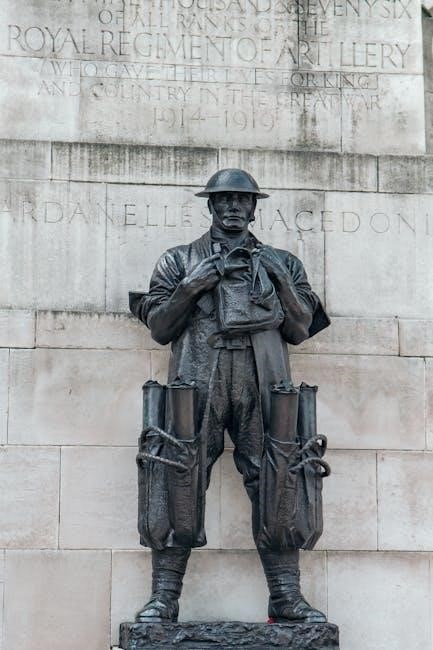
This guide explores the complex history of WWI, examining its causes, key players, major battles, and lasting consequences on global politics and societal structures.
World War I, a global conflict from 1914 to 1918, fundamentally reshaped the 20th century. Encompassing Europe, Russia, the U.S., and the Middle East, it involved most of the world’s great powers, initially forming two opposing alliances. The war’s origins are deeply rooted in long-term tensions, including intricate alliance systems, imperial rivalries, and escalating militarism.
The assassination of Archduke Franz Ferdinand served as the immediate catalyst, triggering a chain reaction that plunged Europe into war. This conflict witnessed unprecedented levels of destruction and resulted in the fall of four great imperial dynasties, leaving a legacy of political and social upheaval.
Causes of World War I
Multiple interwoven factors ignited the Great War. The complex system of alliances meant a localized conflict could escalate rapidly. Intense imperialism and colonial rivalries fueled competition for resources and power. A dangerous militarism and arms race created an atmosphere of suspicion and readiness for war.
However, the spark was the assassination of Archduke Franz Ferdinand in 1914. This event triggered Austria-Hungary’s declaration of war on Serbia, activating pre-existing treaties and drawing major European powers into the conflict, ultimately destabilizing the entire world.
The System of Alliances

A web of intricate alliances dramatically amplified the scope of WWI. The Triple Alliance (Germany, Austria-Hungary, Italy – though Italy later switched sides) faced the Triple Entente (France, Russia, and Great Britain). These pacts, intended to maintain peace, ironically ensured a localized dispute would quickly engulf Europe.
Obligations to defend allies meant nations were compelled to enter the war, even if their direct interests weren’t threatened. This rigid system transformed a regional crisis into a global conflict, escalating tensions and hindering diplomatic resolution.
Imperialism and Colonial Rivalries
Intense competition for colonies fueled tensions leading to WWI. European powers clashed over territories in Africa and Asia, seeking resources and strategic advantages. This scramble for empire created economic and political friction, fostering a climate of distrust and hostility.
Germany, a latecomer to the imperial game, felt disadvantaged and challenged the existing colonial order held by Britain and France. These rivalries contributed to a sense of nationalistic fervor and a willingness to assert dominance, ultimately escalating the risk of war.
Militarism and the Arms Race
A pervasive belief in the necessity of military strength drove an escalating arms race among European powers. Nations engaged in a relentless buildup of armies and navies, fueled by technological advancements and nationalistic pride. This created a dangerous cycle of fear and suspicion.
Germany’s naval expansion, particularly, alarmed Great Britain, prompting a naval rivalry. The constant preparation for war fostered a climate where military solutions were seen as increasingly viable, and diplomatic options diminished, contributing significantly to the outbreak of hostilities.
The Assassination of Archduke Franz Ferdinand
The assassination of Archduke Franz Ferdinand of Austria-Hungary in Sarajevo on June 28, 1914, served as the immediate trigger for World War I. Gavrilo Princip, a Serbian nationalist, committed the act, motivated by desires for a unified Slavic state.
Austria-Hungary, backed by Germany, issued a harsh ultimatum to Serbia. Serbia’s partial acceptance wasn’t enough, leading Austria-Hungary to declare war. This quickly escalated due to the complex web of alliances, pulling major European powers into the conflict and initiating the Great War.
Key Combatants and Their Alliances
World War I pitted two major alliances against each other: the Allied Powers and the Central Powers. The Allied Powers initially comprised France, Britain, and Russia; later joined by Italy (1915) and the United States (1917). These nations were bound by treaties and shared strategic interests.
The Central Powers consisted of Germany, Austria-Hungary, the Ottoman Empire, and Bulgaria. Driven by imperial ambitions and mutual defense agreements, these powers challenged the existing European order, ultimately leading to a global conflict of unprecedented scale.
The Allied Powers
Initially, the Allied Powers centered around the Entente Cordiale – a series of agreements between France and Great Britain, later expanded to include Russia. These nations shared concerns regarding Germany’s growing power and expansionist policies. Italy joined in 1915, motivated by territorial promises.
The pivotal entry of the United States in 1917, prompted by unrestricted submarine warfare and the Zimmerman Telegram, provided crucial manpower and resources. Serbia, Belgium, and Japan also contributed, forming a diverse coalition united against the Central Powers’ aggression.
The Central Powers
The Central Powers were initially formed around the alliance between Germany and Austria-Hungary, solidified by their mutual defense treaty. This pact obligated each nation to support the other in case of attack, directly triggering the chain reaction following Archduke Franz Ferdinand’s assassination.
The Ottoman Empire joined in late 1914, seeking to regain lost territories and counter Russian influence. Bulgaria followed suit in 1915, aiming to secure territorial gains in the Balkans. These powers, though formidable, ultimately lacked the combined resources of the Allied nations.
Major Battles and Fronts
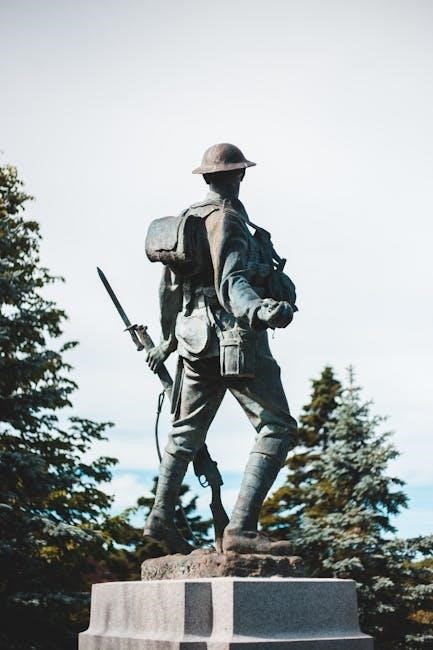
World War I was characterized by brutal, protracted battles across multiple fronts. The Western Front, dominated by trench warfare, saw immense casualties at battles like the Somme and Verdun, resulting in minimal territorial gains. Simultaneously, the Eastern Front witnessed fierce fighting between Germany/Austria-Hungary and Russia, marked by greater fluidity but equally devastating losses.
The Gallipoli Campaign, a failed attempt by the Allies to knock the Ottoman Empire out of the war, exemplified the strategic complexities and high costs of the conflict. These fronts defined the war’s landscape.
The Western Front: Trench Warfare
The Western Front became synonymous with trench warfare, a brutal form of combat where opposing armies dug elaborate networks of trenches. Life in the trenches was horrific – soldiers faced constant shelling, disease, and the threat of attack. The space between trenches, “no man’s land,” was a deadly obstacle course.
Battles like the Somme and Verdun exemplified the stalemate, with massive casualties for minimal territorial gain. This static warfare dramatically reshaped military tactics and resulted in unprecedented levels of destruction.
The Eastern Front: Russia’s Involvement
Russia’s participation on the Eastern Front was initially strong, but quickly revealed significant weaknesses in its military and infrastructure. Facing Germany and Austria-Hungary, Russian forces suffered massive defeats, including Tannenberg and the Masurian Lakes. These losses exposed logistical problems and a lack of modern equipment.
Internal unrest, fueled by war weariness and economic hardship, grew steadily. Ultimately, Russia’s involvement contributed to the 1917 revolutions, leading to its withdrawal from the war and reshaping the political landscape.
The Gallipoli Campaign
The Gallipoli Campaign (1915-1916) was a failed Allied attempt to seize the Dardanelles Strait, aiming to knock the Ottoman Empire out of the war and open a supply route to Russia. British and Anzac forces landed on the Gallipoli Peninsula, facing fierce Ottoman resistance in brutal conditions.
The campaign became a costly stalemate, marked by horrific casualties on both sides. After months of fighting, Allied forces were evacuated, resulting in a significant defeat and lasting impact on national identities, particularly in Australia and New Zealand.
Technological Advancements in WWI
World War I witnessed a dramatic acceleration in military technology, fundamentally changing warfare. The introduction of machine guns created devastating defensive firepower, leading to trench warfare and immense casualties. Poison gas, though initially ineffective, introduced a new level of horror and prompted the development of gas masks.
Tanks emerged as early armored warfare vehicles, though initially unreliable, they foreshadowed future armored tactics. These advancements, alongside improvements in artillery and aircraft, contributed to the unprecedented scale of destruction and the prolonged stalemate of the war.
Machine Guns and Their Impact
Machine guns profoundly impacted World War I, transforming defensive capabilities and contributing significantly to the horrific stalemate on the Western Front. These weapons allowed a small number of soldiers to inflict massive casualties on advancing troops, making traditional offensive tactics obsolete and incredibly costly.
The sheer volume of fire generated by machine guns necessitated the development of trench warfare, as soldiers sought protection from the relentless barrage. This resulted in a brutal, static conflict characterized by immense loss of life and limited territorial gains.
The Use of Poison Gas
The introduction of poison gas during World War I marked a terrifying new dimension in warfare, causing immense suffering and psychological trauma. Initially used by the Germans, gas attacks quickly escalated as both sides developed and deployed various toxic agents like chlorine, mustard gas, and phosgene.
These gases caused blindness, burns, and agonizing respiratory failure, often leading to a slow and painful death. The use of gas prompted the development of gas masks, but these offered only partial protection, and the threat of gas attacks loomed constantly over soldiers.
Tanks and Early Armored Warfare

The advent of tanks during World War I represented a pivotal, though initially limited, step in the evolution of armored warfare. Introduced by the British in 1916, early tanks were slow, mechanically unreliable, and vulnerable, but they offered a potential solution to the stalemate of trench warfare.
These armored vehicles aimed to break through enemy lines, crush barbed wire, and provide mobile firepower. While their impact was initially modest, tanks demonstrated the future potential of mechanized warfare, paving the way for more advanced armored vehicles in subsequent conflicts and fundamentally altering battlefield tactics.

The Home Front During WWI
World War I profoundly impacted civilian life, transforming the “home front” into a crucial component of the war effort. Governments mobilized entire populations through propaganda, shaping public opinion and encouraging support for the conflict. This included rationing, war bonds, and suppressing dissent.
Notably, the war dramatically altered women’s roles, as they filled jobs vacated by men serving in the military, contributing significantly to industrial production and other essential sectors. The immediacy of news, even regarding casualties, changed with technologies like television, impacting public reaction.
Propaganda and Public Opinion
Governments extensively utilized propaganda during WWI to maintain public support and demonize the enemy. Techniques included posters, pamphlets, and news manipulation, fostering a climate of national unity and encouraging enlistment. This aimed to control narratives and suppress anti-war sentiment.
The rise of mass media allowed for rapid dissemination of these messages, shaping public perception of the conflict. Comparing modern reactions to single casualties in conflicts like Afghanistan with the immense losses at the Somme highlights a shift in public sensitivity, influenced by media coverage.
Women’s Roles in the War Effort
With men deployed to the front lines, women stepped into traditionally male roles during WWI, fundamentally altering societal expectations. They filled vital positions in factories, producing munitions and supplies, and also served as nurses, ambulance drivers, and in support roles within the military.
This mass entry into the workforce demonstrated women’s capabilities and contributed significantly to the Allied war effort. While often facing discrimination and lower wages, their contributions paved the way for future advancements in women’s rights and equality.
The End of World War I and its Aftermath
The armistice of November 1918 signaled the end of fighting, but the aftermath was fraught with challenges. The Treaty of Versailles imposed harsh terms on Germany, including territorial losses, disarmament, and substantial reparations, fostering resentment.
Furthermore, the war led to the fall of four great imperial dynasties – the German, Russian, Austro-Hungarian, and Ottoman empires – reshaping the political landscape of Europe and the Middle East. The creation of the League of Nations aimed to prevent future conflicts, though ultimately proved ineffective.
The Treaty of Versailles and its Terms
Signed in 1919, the Treaty of Versailles officially ended WWI but sowed seeds of future conflict. Germany accepted full responsibility for the war (the “war guilt” clause) and faced crippling reparations payments. Territorial losses included Alsace-Lorraine, parts of Eastern Europe, and colonies.
Military restrictions drastically reduced the German army and navy, prohibiting certain weapons. These harsh terms fostered resentment and economic hardship within Germany, contributing to political instability and ultimately, the rise of extremist ideologies that would later fuel WWII.
The Fall of Imperial Dynasties
World War I dramatically reshaped the political landscape of Europe, leading to the collapse of four great imperial dynasties: the German, Austro-Hungarian, Ottoman, and Russian empires. These empires, long-standing pillars of power, crumbled under the strain of war, internal unrest, and revolutionary movements.
The war’s outcome facilitated the rise of new nation-states from the remnants of these empires, fundamentally altering the map of Europe and the Middle East. This period of upheaval created power vacuums and fueled nationalist aspirations, setting the stage for future conflicts and geopolitical shifts.
The League of Nations and its Goals
Established in the aftermath of World War I, the League of Nations represented a pioneering attempt at international cooperation and collective security. Driven by a desire to prevent future global conflicts, its primary goal was to resolve disputes peacefully through diplomacy and negotiation, rather than resorting to war.
Though ultimately unsuccessful in preventing World War II, the League laid the groundwork for the United Nations. It addressed issues like disarmament, territorial disputes, and humanitarian concerns, showcasing a novel approach to international relations despite facing significant challenges and limitations.
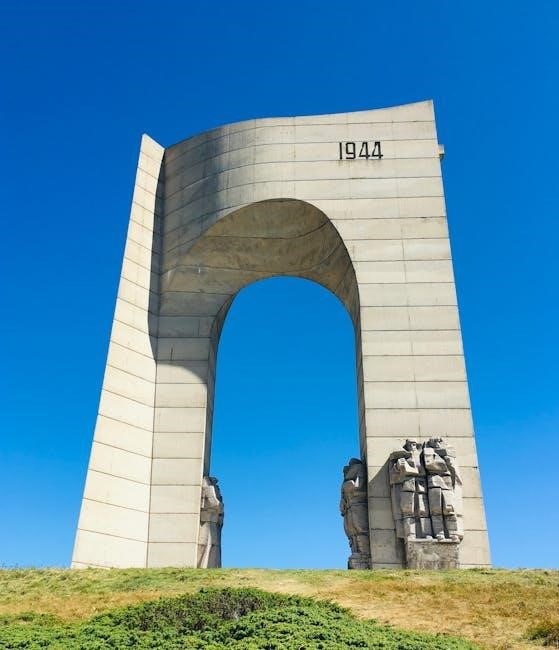
Long-Term Consequences of World War I
World War I’s repercussions extended far beyond the 1918 armistice, fundamentally reshaping the 20th century. The war’s destabilizing effects directly contributed to the rise of extremist ideologies, notably fascism and Nazism, creating fertile ground for future conflict.
Furthermore, the redrawing of the Middle East map, through agreements like Sykes-Picot, sowed the seeds of ongoing regional instability. The collapse of empires and the harsh terms of the Treaty of Versailles fostered resentment and ultimately, the conditions leading to World War II.
The Seeds of World War II
The Treaty of Versailles, intended to secure peace, ironically planted the seeds for another global conflict. Its punitive measures against Germany – territorial losses, disarmament, and crippling reparations – fostered deep resentment and economic hardship. This created a breeding ground for extremist ideologies like Nazism, promising national restoration.
The failure of the League of Nations to effectively address aggression, coupled with the appeasement policies of the 1930s, emboldened expansionist powers. The US return to isolationism, through Neutrality Acts, further hampered collective security, allowing tensions to escalate unchecked.
The Redrawing of the Middle East Map
The collapse of the Ottoman Empire during WWI led to a dramatic reshaping of the Middle East, largely orchestrated by Britain and France through secret agreements like the Sykes-Picot Agreement. These imposed artificial borders, disregarding existing ethnic and religious divisions.
This created states with inherent instability, sowing the seeds for future conflicts. The Balfour Declaration, promising a Jewish homeland in Palestine, further complicated matters, leading to decades of Arab-Israeli tension. Many current regional problems trace their origins to these post-WWI decisions and the resulting power vacuum.
The Rise of New Ideologies
World War I’s devastation and disillusionment fostered fertile ground for radical ideologies. The war’s failures discredited traditional political systems, leading to increased support for alternatives like communism, exemplified by the Bolshevik Revolution in Russia.
Fascism also emerged, particularly in Italy and later Germany, capitalizing on nationalistic fervor and resentment over the Treaty of Versailles. These ideologies promised strong leadership and national renewal, appealing to populations yearning for stability and purpose after the war’s trauma. The conflict fundamentally altered the political landscape of Europe.