
The debate between manual and automatic transmissions continues‚ fueled by evolving technology and driver preferences.
Historically favored for control‚ manuals now face challenges from increasingly sophisticated automatic systems‚
including dual-clutch and continuously variable transmissions‚ as automation reshapes the automotive landscape.
Historical Context of Manual Transmissions
Manual transmissions predate the automobile itself‚ originating with early steam-powered vehicles requiring operators to manually shift gears. As gasoline engines emerged in the late 19th and early 20th centuries‚ manual gearboxes became standard‚ demanding driver skill for clutch operation and gear selection.
These early systems were complex and physically demanding‚ evolving over decades with improvements in synchronization and gear ratios. For much of automotive history‚ mastering a manual transmission was a fundamental driving skill.
The rise of automatics didn’t immediately displace manuals‚ but signaled a shift towards convenience and accessibility for a broader range of drivers.
Early manuals were essential‚ but the landscape was about to change.
The Rise of Automatic Transmissions
Automatic transmissions emerged in the early 20th century‚ initially as complex and expensive alternatives to manual gearboxes. Early automatics‚ like the Hydramatic introduced in 1940‚ utilized fluid coupling to provide smoother gear changes‚ reducing driver fatigue.
Post-World War II‚ automatic transmissions gained popularity‚ particularly in the United States‚ driven by a desire for ease of use and convenience. This trend coincided with increased traffic congestion and a growing demand for comfortable driving experiences.
The shift towards automatics accelerated with advancements in hydraulic and electronic control systems‚ making them more reliable and efficient. Despite enthusiast resistance‚ automatics steadily gained market share‚ becoming the dominant choice for many drivers.

Core Mechanical Differences
Fundamentally‚ manual transmissions rely on direct mechanical engagement of gears‚ while automatics employ fluid dynamics and planetary gearsets for shifting‚ creating distinct operational approaches.
Manual Transmission: How it Works
A manual transmission operates through a driver-controlled system of gears and a clutch. The engine’s power is transmitted to the transmission‚ which houses various gear ratios. The driver selects the appropriate gear using a shift lever‚ physically engaging different gear combinations.
This process requires coordinating the clutch pedal – which temporarily disconnects the engine from the transmission – with the gear changes. Pressing the clutch allows for smooth shifting between gears‚ while releasing it re-engages the power. The direct mechanical link between the engine and wheels provides a feeling of control and responsiveness‚ but demands driver skill and engagement.
Essentially‚ the driver is the transmission control system‚ making decisions based on speed‚ load‚ and desired acceleration.
Automatic Transmission: How it Works
Automatic transmissions utilize a complex hydraulic system and planetary gearsets to shift gears automatically‚ eliminating the need for a clutch pedal or manual gear selection; Instead of direct driver control‚ a torque converter fluid coupling transmits power from the engine to the transmission.
The transmission’s control unit (TCU) monitors vehicle speed‚ engine load‚ and throttle position to determine the optimal gear. Hydraulic pressure then engages different gearsets‚ seamlessly changing ratios without driver intervention.
This system prioritizes convenience and ease of use‚ but historically sacrificed some of the direct connection and efficiency found in manual systems – a gap that modern automatics are rapidly closing.
Clutch System in Manual Transmissions
The clutch is a fundamental component of a manual transmission‚ acting as a link between the engine and the gearbox. When engaged‚ it transmits power‚ allowing the engine to drive the wheels. Disengaging the clutch‚ via the clutch pedal‚ temporarily disconnects the engine‚ enabling gear changes.
This process requires precise coordination from the driver – depressing the pedal‚ selecting the desired gear‚ and smoothly releasing the clutch to avoid jerking or stalling. Mastering this coordination is key to a smooth driving experience.
The clutch system provides direct mechanical control‚ offering drivers a tangible connection to the vehicle’s power delivery;
Torque Converter in Automatic Transmissions
Unlike the mechanical clutch in manual transmissions‚ automatic transmissions utilize a torque converter. This fluid coupling transmits engine power to the gearbox‚ employing hydraulic pressure instead of a direct mechanical link. It allows the engine to continue running even when the wheels are stopped‚ preventing stalling.
The torque converter also multiplies torque at lower speeds‚ enhancing acceleration. Modern torque converters often include a lock-up clutch to improve efficiency at cruising speeds‚ mimicking a direct connection.
This system provides seamless gear changes without driver intervention‚ prioritizing convenience and ease of use.
Driving Experience & Control
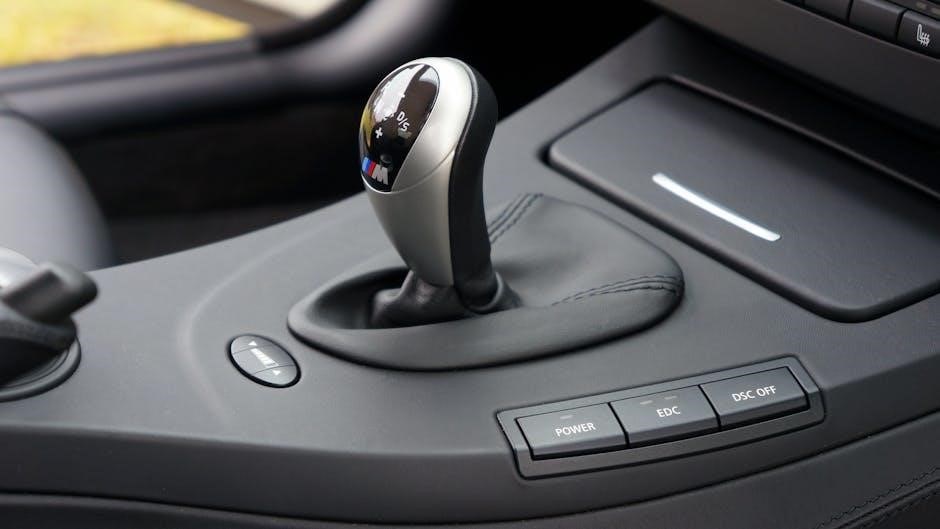
Manual transmissions offer heightened driver engagement and control‚ demanding active participation in gear selection. Automatic transmissions prioritize ease and convenience‚ simplifying the driving process for a relaxed experience.
Driver Engagement and Control in Manual Cars
Manual transmissions fundamentally connect the driver to the vehicle‚ demanding a proactive role in managing power delivery. This direct involvement fosters a sense of control and responsiveness often absent in automatic systems. The driver dictates gear selection‚ influencing acceleration‚ engine braking‚ and overall driving dynamics.
This level of engagement appeals to enthusiasts who relish the tactile experience of shifting gears and mastering clutch control. It allows for precise adjustments based on road conditions and driving style‚ enhancing the connection between driver and machine. The need for coordination between hands and feet creates a more immersive and rewarding driving experience‚ offering a feeling of mastery and control that many find deeply satisfying.
Ease of Use and Convenience of Automatic Cars
Automatic transmissions prioritize simplicity and convenience‚ eliminating the need for clutch operation and manual gear changes. This is particularly advantageous in congested urban environments‚ reducing driver fatigue and mental workload. Drivers can focus solely on steering and braking‚ making for a more relaxed driving experience.
The ease of use extends to a wider range of drivers‚ including those less experienced or with physical limitations. Modern automatics offer smooth‚ seamless shifts‚ often imperceptible to the passenger. This accessibility contributes to their widespread adoption in everyday vehicles‚ catering to a broader audience seeking a hassle-free driving experience.
Performance: Manual vs. Automatic
Historically‚ manual transmissions offered a performance edge due to direct power delivery and driver control over gear selection. However‚ modern automatic transmissions‚ particularly those with multiple gears and advanced control systems‚ have largely closed this gap. Dual-clutch transmissions (DCTs) now often provide faster shift times than a skilled manual driver can achieve.
While manuals still allow for precise engine braking and control‚ automatics excel in consistent acceleration. The performance difference often depends on the specific vehicle and transmission technology. Select sports cars continue to favor manuals for driver engagement‚ but automatics are increasingly competitive‚ offering comparable or even superior performance in many scenarios.
Fuel Efficiency: Manual vs. Automatic
Traditionally‚ manual transmissions were considered more fuel-efficient due to their simpler mechanical design and lack of parasitic losses from a torque converter. However‚ advancements in automatic transmission technology have significantly narrowed this gap. Modern automatics‚ especially those with eight or more gears‚ can often match or even exceed the fuel economy of their manual counterparts.
Factors like driving style and vehicle weight play a crucial role. Continuously Variable Transmissions (CVTs)‚ a type of automatic‚ are specifically designed for optimal fuel efficiency. While manuals still offer potential for maximizing mileage with skillful driving‚ the difference is becoming less pronounced as automatic technology evolves.
Technological Advancements
Automatic transmissions have seen revolutionary changes with the introduction of Dual-Clutch Transmissions (DCTs) and Continuously Variable Transmissions (CVTs)‚
while manual transmissions remain largely unchanged‚ facing declining popularity.
Modern Automatic Transmission Technologies (DCT‚ CVT)
Dual-Clutch Transmissions (DCTs) represent a significant leap forward‚ offering incredibly fast and smooth gear changes. They essentially combine the efficiency of a manual with the convenience of an automatic‚ utilizing two separate clutches for pre-selecting the next gear.
Continuously Variable Transmissions (CVTs) take a different approach‚ employing a belt-and-pulley system to provide an infinite number of gear ratios within a specific range. This allows the engine to operate at its most efficient point‚ maximizing fuel economy and providing a seamless driving experience.
Unlike traditional automatics‚ these modern technologies minimize power loss and offer enhanced control‚ blurring the lines between manual and automatic driving experiences. They address many of the performance drawbacks previously associated with automatic transmissions.
The Declining Popularity of Manual Transmissions
The shift towards automatic transmissions is undeniable‚ driven by factors like increasing urbanization and a growing preference for ease of use. Fewer drivers‚ particularly younger generations‚ are learning to operate a manual gearbox‚ contributing to its dwindling market share.
Electrification also plays a crucial role‚ as electric vehicles typically don’t require multi-gear transmissions. Furthermore‚ the advancements in automatic technology – DCTs and CVTs – have eliminated many of the performance and efficiency advantages once held by manuals.
Despite enthusiast efforts‚ the practicality and convenience of automatics are winning out‚ signaling a potential future where manual transmissions become a niche offering‚ reserved for select sports cars.
Impact of Electrification on Transmission Choices
The rise of electric vehicles (EVs) is fundamentally altering transmission needs. Unlike internal combustion engines‚ electric motors deliver peak torque instantly across a wide RPM range‚ significantly reducing the necessity for multiple gears.
Many EVs utilize a single-speed transmission‚ simplifying the drivetrain and enhancing efficiency. This contrasts sharply with the complexity of both manual and traditional automatic transmissions. As EV adoption increases‚ the demand for conventional transmissions will inevitably decrease.
This shift impacts not only new vehicle designs but also the future of automotive manufacturing and repair‚ potentially leading to a decline in skilled technicians specializing in manual and automatic gearboxes.

Maintenance and Repair
Manual transmissions generally require less frequent‚ but more involved‚ maintenance‚ like clutch replacements. Automatic transmissions often need fluid checks and services‚ potentially incurring higher repair costs.
Maintenance Requirements for Manual Transmissions
Maintaining a manual transmission involves several key procedures to ensure longevity and optimal performance. Regular checks of the transmission fluid – though less frequent than with automatics – are crucial‚ alongside inspecting the clutch linkage for wear and proper adjustment. The clutch itself is a wear item‚ eventually requiring replacement depending on driving habits.
Synchronization components also demand attention‚ potentially needing servicing to prevent grinding during gear changes. Furthermore‚ the shift linkage should be inspected for looseness or damage. While generally robust‚ neglecting these areas can lead to costly repairs down the line. Proper care extends the life of a manual gearbox‚ offering reliable operation for years.
Maintenance Requirements for Automatic Transmissions
Automatic transmissions necessitate more frequent and specific maintenance compared to manuals. Regular fluid changes are paramount‚ as the fluid serves as a hydraulic medium and lubricant‚ preventing wear and tear on internal components. Filter replacements are typically performed concurrently with fluid changes‚ ensuring optimal fluid cleanliness.
Checking for leaks is also vital‚ as fluid loss can quickly lead to transmission damage. Modern automatics often require specialized diagnostic scans to monitor transmission health and identify potential issues. Ignoring these maintenance needs can result in expensive repairs or complete transmission failure‚ highlighting the importance of preventative care.
Repair Costs: Manual vs. Automatic
Generally‚ repairing a manual transmission tends to be less expensive than an automatic. Manuals have fewer complex parts‚ simplifying the diagnostic and repair process. Clutch replacements are a common manual transmission repair‚ often costing less than addressing issues within an automatic’s intricate valve body or torque converter.
Automatic transmission repairs‚ however‚ can quickly escalate in cost. Rebuilds or replacements often require specialized tools and expertise‚ driving up labor charges. The complexity of modern automatics‚ including those with dual-clutch or CVT technology‚ further contributes to higher repair bills.
Cost Considerations
Vehicles with manual transmissions typically have a lower initial purchase price‚ but long-term ownership costs can vary.
Automatic transmissions often command a premium upfront‚ influenced by technological advancements and market demand.
Initial Purchase Price: Manual vs. Automatic
Generally‚ vehicles equipped with manual transmissions present a more affordable initial investment compared to their automatic counterparts. This price difference stems from the simpler mechanical design and fewer components inherent in a manual gearbox. Manufacturers often pass these cost savings onto the consumer‚ making manual cars attractive to budget-conscious buyers. However‚ the gap in pricing has been narrowing in recent years.
As automatic transmission technology advances – incorporating features like dual-clutch systems (DCTs) and continuously variable transmissions (CVTs) – the cost of development and production increases. While still typically more expensive‚ the price premium for automatics is becoming less pronounced‚ particularly in higher-end vehicle segments. Ultimately‚ the specific price difference depends on the vehicle model‚ trim level‚ and optional features.
Long-Term Ownership Costs
Considering long-term ownership‚ the cost landscape shifts somewhat between manual and automatic transmissions. Manual cars often benefit from lower maintenance expenses due to their simpler mechanics; clutch replacements are a key cost‚ but generally less frequent than major automatic transmission servicing. However‚ driver skill impacts clutch life significantly.
Automatic transmissions‚ particularly older designs‚ can incur higher repair bills if issues arise. Modern automatics‚ while more reliable‚ still have complex components. Fuel efficiency‚ historically favoring manuals‚ is now less of a differentiator with advanced automatic gearboxes. Ultimately‚ predictable maintenance schedules and potential repair costs should be factored into the total cost of ownership for both transmission types.

Applications & Vehicle Types
Manual transmissions remain popular in sports cars for driver engagement‚ while automatics dominate everyday vehicles for convenience. Motorcycles frequently utilize manual gearboxes for control.
Manual Transmissions in Sports Cars
Sports cars often retain manual transmissions due to the enhanced driver connection and control they provide. Enthusiasts appreciate the direct engagement‚ feeling more involved in the driving experience and having precise command over gear selection. This allows for optimized performance during spirited driving and track days‚ maximizing the vehicle’s potential.
While modern automatics‚ particularly dual-clutch transmissions (DCTs)‚ are closing the gap in speed and efficiency‚ many purists still prefer the tactile feedback and sense of mastery offered by a manual gearbox. Despite the declining overall popularity of manuals‚ manufacturers continue to offer them in select sports car models to cater to this dedicated segment of drivers who value the traditional driving experience.
Automatic Transmissions in Everyday Vehicles
Automatic transmissions dominate the everyday vehicle market due to their ease of use and convenience. They eliminate the need for constant clutch and gear lever operation‚ simplifying driving‚ especially in congested traffic. This accessibility makes them ideal for a broader range of drivers‚ reducing driver fatigue during daily commutes.
Modern automatics offer smooth gear changes and improved fuel efficiency compared to older designs. The advancements in automatic gearbox technology‚ like continuously variable transmissions (CVTs)‚ further enhance the driving experience. While some may perceive a slight disconnect from the vehicle‚ the convenience and practicality of automatics outweigh this for most everyday drivers.
Manual vs. Automatic in Motorcycles
Traditionally‚ motorcycles have almost exclusively utilized manual transmissions‚ fostering a direct connection between rider and machine. This manual operation provides precise control over power delivery‚ crucial for cornering and navigating varied terrain. However‚ automatic or semi-automatic transmissions are emerging‚ offering simplified operation‚ particularly for newer riders or urban commuting.
While purists champion the engagement of a manual gearbox‚ automatic systems reduce rider fatigue and complexity. These systems‚ often employing DCT technology‚ allow for quicker shifts and smoother acceleration. Despite growing availability‚ manual transmissions remain dominant‚ reflecting the romanticized and skill-based nature of motorcycle riding.
Future Trends
Autonomous driving technologies threaten both transmission types‚ while electrification increasingly favors single-speed systems. A potential revival of manuals hinges on enthusiast demand and a desire for driver engagement.
The Role of Autonomous Driving
The rise of autonomous driving presents a significant challenge to both manual and traditional automatic transmissions. As vehicles progress towards full self-driving capabilities‚ the need for driver-operated gear changes diminishes substantially. Autonomous systems prioritize smooth‚ efficient operation‚ often best achieved with single-speed transmissions or highly advanced automatic gearboxes.
This shift implies a reduced reliance on the intricate mechanical linkages of manual transmissions and even the complexities of conventional automatics. The focus will likely be on electric motors delivering torque directly to the wheels‚ bypassing the need for multi-gear systems altogether. Consequently‚ the future of driving may see a decline in the relevance of both manual and conventional automatic transmissions as autonomous technology matures and becomes more widespread.
Potential Revival of Manual Transmissions?
Despite predictions of obsolescence‚ a niche revival of manual transmissions isn’t entirely impossible. A segment of driving enthusiasts continues to cherish the engagement and control offered by a stick shift‚ fueling demand in select sports car models. This passion‚ coupled with a desire for a more “connected” driving experience‚ could sustain limited production runs.
However‚ any revival would likely be focused on high-performance vehicles where driver involvement is paramount. Furthermore‚ manufacturers might offer manuals as a premium option‚ appealing to a specific customer base willing to pay for the experience. Ultimately‚ the future of manual transmissions hinges on preserving its appeal as a unique and engaging driving characteristic.
Safety Features
Modern automatics often include advanced safety technologies‚ like electronic stability control‚ enhancing overall vehicle safety. Manuals rely more on driver skill for control in critical situations.
Safety Considerations with Manual Transmissions
Manual transmissions demand greater driver attention and skill‚ particularly in challenging conditions. The need to coordinate clutch engagement‚ gear selection‚ and throttle control can be distracting‚ potentially increasing the risk of errors.
Stalling‚ while generally not dangerous‚ can create hazardous situations in traffic.
Furthermore‚ drivers unfamiliar with heel-toe downshifting or rev-matching may experience reduced control during aggressive driving.
However‚ the increased driver engagement can also foster a heightened awareness of the vehicle’s dynamics.
Experienced drivers may feel more connected and in control‚ allowing for quicker reactions.
Ultimately‚ safety with a manual transmission hinges on the driver’s proficiency and responsible operation.
Safety Features in Automatic Transmissions
Automatic transmissions generally offer a simpler driving experience‚ reducing cognitive load and allowing drivers to focus more on the road. Features like hill-start assist‚ preventing rollback on inclines‚ enhance safety. Modern automatics often include drive mode selectors‚ offering options for optimized performance or fuel efficiency‚ potentially aiding in safer driving scenarios.
Furthermore‚ the absence of a clutch pedal eliminates the risk of stalling‚ a common concern for manual drivers. Advanced automatic systems‚ like those with predictive shifting‚ can anticipate driving conditions and select the appropriate gear‚ contributing to smoother and safer operation. These features collectively promote a more relaxed and secure driving environment.

Global Market Trends
Regional preferences heavily influence transmission choices‚ with manuals remaining popular in some markets while automatics dominate others. Sales figures demonstrate a global shift towards automatic transmissions overall.
Regional Preferences for Manual vs. Automatic
Globally‚ a distinct divergence exists in transmission preferences. Europe and South America traditionally exhibit a stronger affinity for manual transmissions‚ often due to factors like cost‚ driving culture‚ and road conditions. Conversely‚ North America has overwhelmingly favored automatic transmissions for decades‚ prioritizing convenience and ease of use.
Asia presents a more nuanced picture‚ with countries like Japan and South Korea showing increasing adoption of automatics‚ particularly advanced types like CVTs. However‚ in certain Asian regions‚ manuals still hold significant market share‚ especially in more affordable vehicle segments. These preferences are deeply rooted in historical automotive development and consumer expectations within each region.
Sales Figures and Market Share
Recent data reveals a dramatic shift in transmission market share. Globally‚ automatic transmissions dominate‚ accounting for over 90% of new vehicle sales in North America and steadily increasing in Europe and Asia. Manual transmission sales have been consistently declining‚ representing a small‚ niche segment‚ primarily found in sports cars and select economy models.
While precise figures vary by country‚ the trend is clear: automatics are the preferred choice for most consumers. This decline in manual sales is attributed to advancements in automatic technology‚ increased demand for convenience‚ and the rise of electric vehicles‚ which often don’t require traditional transmissions.

Choosing the Right Transmission
Ultimately‚ the “right” transmission depends on individual needs and priorities. Automatic transmissions offer unparalleled convenience and ease of use‚ making them ideal for daily commuting and diverse driving conditions. Modern automatics‚ like DCTs and CVTs‚ also deliver impressive performance and fuel efficiency.
However‚ manual transmissions still appeal to enthusiasts seeking a more engaging driving experience and greater control. While their market share diminishes‚ manuals retain a dedicated following. Considering factors like driving style‚ vehicle type‚ and long-term ownership costs will guide the optimal choice.